
How thick should window glass be?
Free Quotes
Assess your options with ease by requesting a quick quote from our experts
Quick Turnaround
Whether we’re installing a brand new window or repairing a current one, we offer swift response and service
Top Aftercare
Our aftercare, repair and maintenance services are tailored to you and second to none
Insured & Accredited
Rest assured in the quality and longevity of your product, thanks to our accreditations and insurance
Value for Money
Bespoke products for affordable prices, giving you more for your money
Expert Glaziers
Established over 40 years ago, we are supported by a team of skilled glazing specialists
Determining the thickness of the glass used is one of (if not the) most important part of a glazing project.
At different thicknesses, glass will offer a range of unique properties. Beyond the obvious increased strength of thicker glass, thinner glass is more lightweight, and is usually more cost-efficient. So, it is key to find the optimum thickness for your project’s specific use case and context.
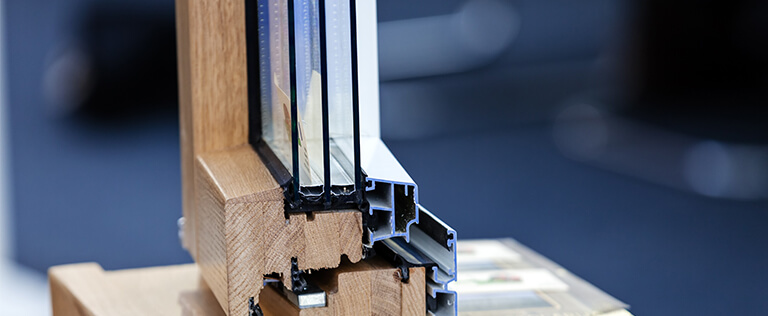
Below, we have shared a quick and easy guide to understanding how thick window glass should be.
What thicknesses of glass are available?
Glass is available in a wide range of thicknesses, to achieve a best-fit for different use cases and applications.
The most common glass thicknesses and their usage includes:
- 2mm glass – Most commonly found in picture frames.
- 4mm glass – Typically used in Standard Timber Window Glazing
- 6mm glass – Widely used in indoor applications, such as splashbacks.
- 6.4mm glass (laminated) – A common choice for internal windows and doors.
- 7mm glass – This is a standard recommended thickness for fire-rated glass. As such, it is commonly used in internal doors and windows.
- 8mm glass – Typically used for larger tables and shower units.
- 8.8mm glass (laminated) – Commonly used for large internal doors and windows.
- 10mm glass – Also often used for larger tables and shower units, plus other glass partitions.
- 10.8mm glass (laminated) – Selected for large indoor screens.
- 12mm glass – Also often used for larger tables and shower units, plus glass partitions, walls and kitchen worktops. Can also be used for frameless glass balustrades.
- 13.5mm glass (laminated) – Typically used for indoor balustrade systems (in domestic properties).
- 17.5mm glass (laminated) – Chosen for outdoor applications, such as outdoor balustrade systems and Juliet balconies (in domestic properties).
- 21.5mm glass (laminated) – Used for indoor balustrade systems in commercial properties.
- 25.5mm glass (laminated) – Chosen for outdoor balustrade systems and Juliet balconies in commercial properties.
- 33mm glass (laminated) – Used for glass flooring, and other projects that require extremely high strength and durability.
For double glazing and triple glazing units, the standard window glass thicknesses are:
- Double glazing glass (with air between the panes) – 14-24mm
- Double glazing glass (with argon between the panes) – 14-24mm
- Triple glazing glass (with air between the panes) – 44mm
- Triple glazing glass (with argon between the panes) – 24mm
Why are different glass thicknesses important?
By casting it at different thicknesses, glass can be given different properties and qualities, which make it a better fit for specific projects.
There are advantages to choosing both thicker and thinner glass panes. So, to achieve the best results, a balance needs to be reached.
The benefits of using thicker glass:
- Higher strength
- Higher durability
- The ability to support more weight, meaning it can be used in load-bearing applications
- Less fragile (than thinner glass)
- Improved insulation
- Improved safety (due to the reduced risk of breaking)
- More effective noise reduction
The benefits of using thinner glass:
- Lower cost
- Lighter weight (meaning less strain on structures)
- Improved ease of handling
- Ability to be used in a versatile range of applications
- Aesthetic appeal
- The ability to respond more quickly to temperature changes
As you can see, choosing the right thickness for your glass is key to not only ensuring the right degree of strength and durability, but balancing this with aesthetics and cost-effectiveness.
This is why such a broad range of glass thicknesses are available – to ensure every project can feature the correct optimum glass thickness.
If you’re unsure what the right glass thickness is for your glazing project, or are looking to enlist a skilled and trusted glazing specialist, the Abbey Glass team is on hand to help. Contact us if you need new or replacement glass in and around the Sheffield area.


